
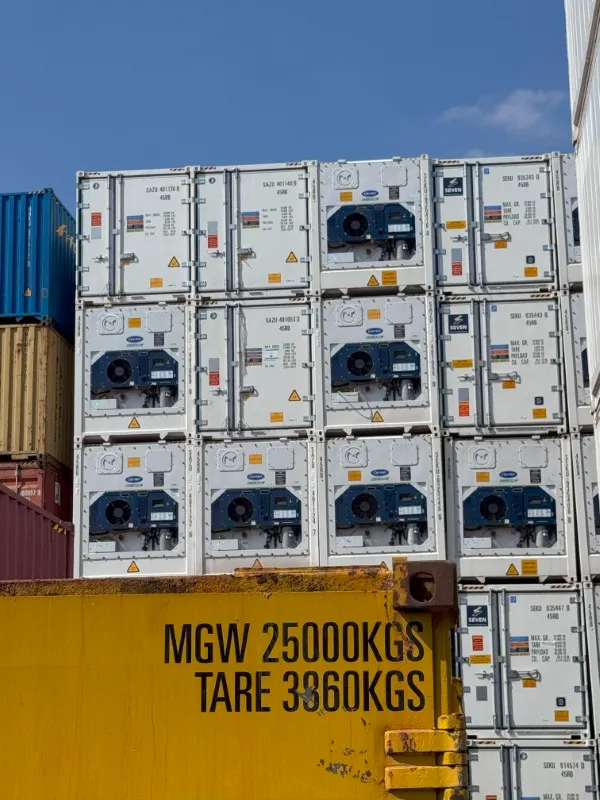
10ft Refrigerated and Freezer Shipping Container
Container Projects delivers temperature-controlled units to the food, pharmaceutical, and chemical industries. For long-term cold storage assets, browse our container sales inventory. If you require temporary cooling for events or seasonal demand, our container hire service offers flexible agreements. You can request a container quote to receive a full cost breakdown for your site. We manage the logistics to ensure your unit arrives calibrated and ready for operation.
10ft Refrigerated and Freezer technical specifications
The 10ft refrigerated and freezer container is a compact unit designed for sites with limited space. These units feature stainless steel internal walls and T-bar aluminium flooring for airflow. Unlike standard dry units, refrigerated containers include an integrated cooling motor, which reduces internal length.
| 10ft Reefer Dimension | Length (mm) | Width (mm) | Height (mm) |
|---|---|---|---|
| External (Standard) | 2991 | 2438 | 2591 |
| External (High Cube) | 2991 | 2438 | 2896 |
| Internal (Approx) | 2390 | 2290 | 2270 |
| Weight Data | Tare: 2850kg | Payload: 11400kg | Max Gross: 14250kg | ||
Tare is the weight of an empty container, including the machinery. Payload is the maximum weight of cargo the container can carry safely. For higher-volume requirements, Container Projects stocks 20ft thermal and refrigerated containers.
Operational features and use cases
A freezer container is designed to maintain temperatures as low as minus 25 degrees Celsius, while refrigerated units typically operate between plus 25 and minus 25 degrees. These units require a 3-phase 380-440V power supply. Common use cases include butcher overflow, pharmaceutical storage, and catering support for large events. The 10ft size is ideal for car parks or small loading bays where a full-size vehicle cannot operate.
Condition grades and definitions
Container Projects provides units in various conditions to suit the technical needs of the cargo.
- One-trip: A one-trip unit is a container manufactured in Asia and used once for cargo transport to the UK. These are often used for new refrigerated builds to ensure the highest insulation performance.
- IICL: The International Institute of Container Lessors' standards for container inspection and repair. Units meeting this standard are structurally superior for transport.
- Wind and watertight: Wind and watertight is a condition grade ensuring the unit prevents light and moisture ingress. For reefers, this also implies the insulation and seals are intact to maintain temperature.
Hire versus buy
Buying a refrigerated unit is recommended for permanent site installations that require consistent cold storage. Container Projects offers a container buy-back scheme for customers who eventually no longer need their asset. Hiring is the preferred choice for short-term projects, providing full breakdown support and maintenance as part of the rental agreement. This removes the risk of equipment failure for the user.
Ready to Start Your Container Project?
Get expert advice on container sales and hire today.
Delivery access, siting, and placement
Precise delivery is handled by container haulage specialists using hiab vehicles. The crane-equipped truck requires significant space to operate safely.
- Access: The vehicle requires a minimum width of 10ft and a minimum height clearance of 15ft.
- Ground Surface: Units must be placed on firm level ground. Soft grass or uneven dirt will cause the unit to sink, which can twist the frame and prevent the heavy insulated doors from sealing correctly.
- Power Siting: The unit must be placed within reach of a suitable 3-phase power point, typically requiring a 32-amp 5-pin plug.
Aftercare, security, and export
Security is maintained through heavy-duty locking bars and a factory-fitted lockbox for padlocks. Aftercare for refrigerated units involves regular cleaning of the T-bar floor to maintain airflow and monthly checks of the door gaskets. If the unit is intended for international shipping, it must have a valid CSC plate. A CSC plate is a safety approval plate required for international shipping under global transport regulations. Container Projects ensures all export units carry a valid certification.
How Container Projects handles supply
- Consultation to determine the required temperature range and power availability.
- Site access check to verify that a hiab vehicle can place the unit.
- Provision of a quote for the specific unit grade and delivery postcode.
- Pre-delivery inspection (PDI) to ensure the cooling motor is fully functional.
- Delivery, placement, and commissioning of the unit on your site.
Frequently asked questions
What power supply is needed for a 10ft reefer?
You require a 3-phase 380/440V supply with a 32-amp motor-rated circuit breaker. Some units can be converted to single-phase, but this is less efficient for deep freezing. See our container types page for electrical variants.
How quickly can the unit reach the target temperature?
Pull-down times vary based on ambient temperature and cargo load, but an empty 10ft unit typically reaches freezing temperatures within 1 to 2 hours of activation.
Can I use the unit as a blast freezer?
Standard refrigerated containers are designed to maintain the temperature of pre-cooled goods. If you need to freeze warm products quickly, please contact us via our contact us page to discuss specialised blast freezer options.
Contact Info
Container Projects LTD
298 Sandycombe Road,
Kew, Richmond,
Surrey
TW9 3NG
Tel: +44 (0) 208 948 5955
Fax: +44 (0) 208 948 3618
Our Services
Need Help?
Office Hours
Monday : 9:00-17:30
Tuesday : 9:00-17:30
Wednesday : 9:00-17:30
Thursday : 9:00-17:30
Friday : 9:00-17:30
Saturday : Closed
Sunday : Closed