
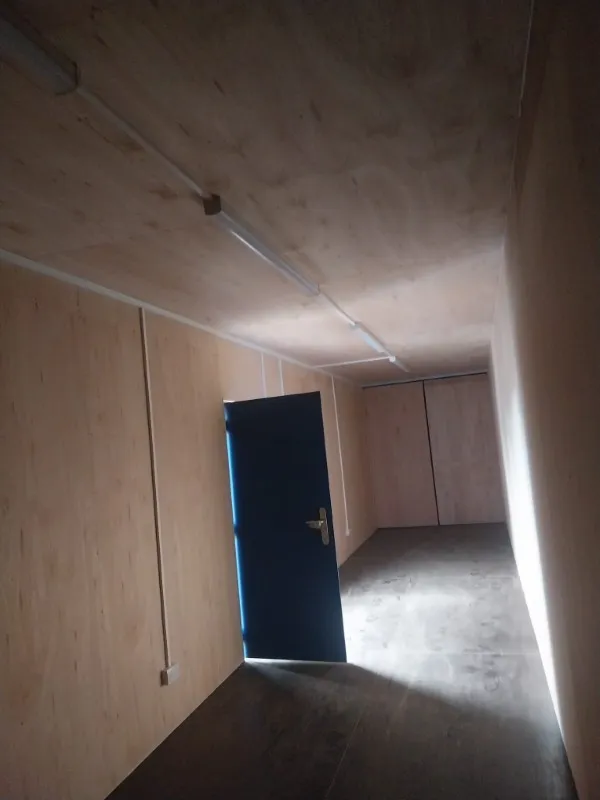
Topper Unit Containers
Container Projects supplies specialised topper units for vertical site expansion. Whether your project requires permanent container sales or short-term container hire, we provide modified units from regional UK depots. To receive a bespoke proposal for your site layout, you can get a quote through our technical office. Topper units allow businesses to double their floor space without increasing their ground footprint. These units are often built using one-trip stock to ensure structural longevity. A one-trip unit is a new container that has made a single journey from the manufacturer to the UK. Every unit intended for international logistics is fitted with a CSC plate. A CSC plate is a safety approval plate required for international shipping to certify structural integrity.
Choose the right container size and type
Topper units are typically modified from 20ft and 40ft frames. Container Projects ensures every conversion maintains the necessary strength for stacking. We often recommend a 20ft high cube for topper conversions to provide 9ft 6in of external height, allowing room for internal ceiling fit-outs.
Modular Offices and Site Accommodation
Topper units are frequently used in modular buildings and site accommodation setups. These units include staircases, railings, and reinforced flooring. For hybrid requirements, we supply 50-50 office stores that can be positioned as a top-tier unit to separate administrative space from inventory.
Technical Limits
When stacking units, the tare and payload must be calculated to ensure the bottom container can support the upper level. The tare is the weight of the empty container. The payload is the maximum weight of cargo the container can carry. We provide structural drawings for all container conversions to confirm load paths and safety margins.
Hire or buy
Container Projects assists clients in selecting the best acquisition route for modular space. Buying a topper unit is ideal for permanent commercial showrooms or long-term construction headquarters. Hire is a flexible solution for temporary site expansions or events. We manage the supply and return logistics for all rental equipment across the UK. You can review all container types to compare static storage versus modified office units.
Condition grades and what they mean
The condition is critical when containers are modified for human occupancy. We grade our stock to ensure safety. For high-end office conversions, we use units that meet the IICL standard. IICL refers to a high standard of container repair and condition set by the Institute of International Container Lessors. For basic vertical storage, we provide used units that are wind- and watertight. A wind- and watertight unit is a condition grade that ensures the unit is sealed against weather and light. Every container dimensions sheet we provide includes specific grade data for your chosen unit.
Delivery access, siting, and placement
Container Projects utilises hiab crane vehicles for precision stacking. Siting a topper unit requires extra preparation compared to ground-level units:
- Crane Reach: The delivery vehicle must be able to park close enough for the crane arm to lift the unit onto the second level.
- Ground Stability: The bottom unit must be perfectly level on a firm surface to prevent the top unit from shifting.
- Vertical Clearance: Check for overhead cables and trees. Stacking two units creates a height of approximately 17ft to 19ft.
- Turning Space: A 40ft delivery vehicle requires a 100ft straight approach for safe manoeuvring.
Security, condensation, and aftercare
Security is managed through heavy-duty locking bars and factory-fitted lock boxes on the main doors. To manage condensation in office toppers, Container Projects installs insulation and internal lining. We provide aftercare advice for staircase maintenance and door seal inspections. Regular checks of the stacking twist-locks are required to ensure the top unit remains securely fastened to the base.
Export use and compliance
If you intend to ship a topper unit internationally, the modifications must be certified by CSC. Cutting windows and doors into a container changes its structural rating. Container Projects facilitates re-certification where required for maritime transport. We ensure your modified workshops or offices meet the necessary safety codes for shipping lines.
How Container Projects handles supply and delivery
- Site Assessment: We confirm the ground-level container is suitable for supporting a topper unit.
- Specification: We select the internal fit-out, including windows, doors, and electrical points.
- Fabrication: Modifications are completed at our UK workshop facility.
- Haulage: We coordinate a specialised hiab delivery to stack the unit on-site.
- Installation: Our team secures the topper unit and checks the access stairs and safety rails.
Frequently asked questions
Do I need a special crane to install a topper unit?
Container Projects typically uses a high-reach hiab truck for standard stacking. For complex sites, a separate mobile crane may be required. Detailed logistics data is on our faq page.
Can any container be used as a topper?
The base unit must be structurally sound and perfectly level. We recommend learning more about us and our engineering standards before stacking modified units.
How do I book a site survey?
You can contact our logistics desk via the contact us page to arrange a review of your site access and stacking requirements.
Contact Info
Container Projects LTD
298 Sandycombe Road,
Kew, Richmond,
Surrey
TW9 3NG
Tel: +44 (0) 208 948 5955
Fax: +44 (0) 208 948 3618
Our Services
Need Help?
Office Hours
Monday : 9:00-17:30
Tuesday : 9:00-17:30
Wednesday : 9:00-17:30
Thursday : 9:00-17:30
Friday : 9:00-17:30
Saturday : Closed
Sunday : Closed