
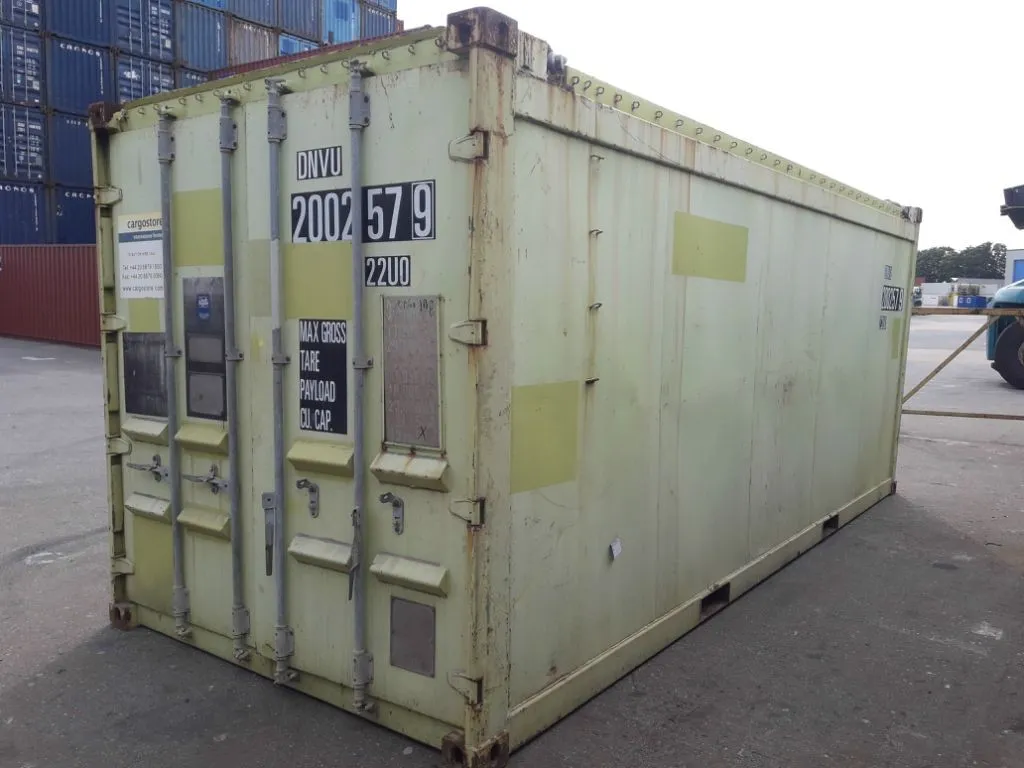
Offshore Shipping Containers
Container Projects manages the supply of specialised offshore equipment for high-stakes environments. You can buy containers for permanent fleet expansion or rent containers for specific project durations. To start your procurement, get a quote from our technical team today. Our logistics network ensures prompt delivery from regional depots to major UK ports and industrial sites.
Offshore containers, also known as Cargo Carrying Units (CCUs), are designed for repeated use in open-sea conditions. Most of our high-specification units are available as one-trip stock. A one-trip unit is a new container that has made a single journey from the manufacturer to the UK. For global transit, every unit is equipped with a valid CSC plate. A CSC plate is a safety approval plate required for international shipping to certify structural safety. Container Projects ensures all offshore inventory meets DNV 2.7-1 and EN 12079 standards.
Choose the right container size and type
Selecting the correct offshore container depends on the vessel or rig's payload requirements and handling constraints. Offshore units differ from standard boxes due to reinforced frames and integrated lifting points.
10ft Offshore Containers
The 10ft offshore unit is a standard choice for transporting tools and small components. It provides a compact footprint for rigs with limited deck space. These units often feature internal tie-down points to secure cargo during heavy seas.
20ft Offshore Containers
The 20ft offshore container matches the footprint of a 20ft general purpose unit but with significantly higher structural strength. These are used for large equipment movements and bulk supply logistics. We provide detailed technical drawings on our container dimensions page to help with deck planning.
Specialised Offshore Units
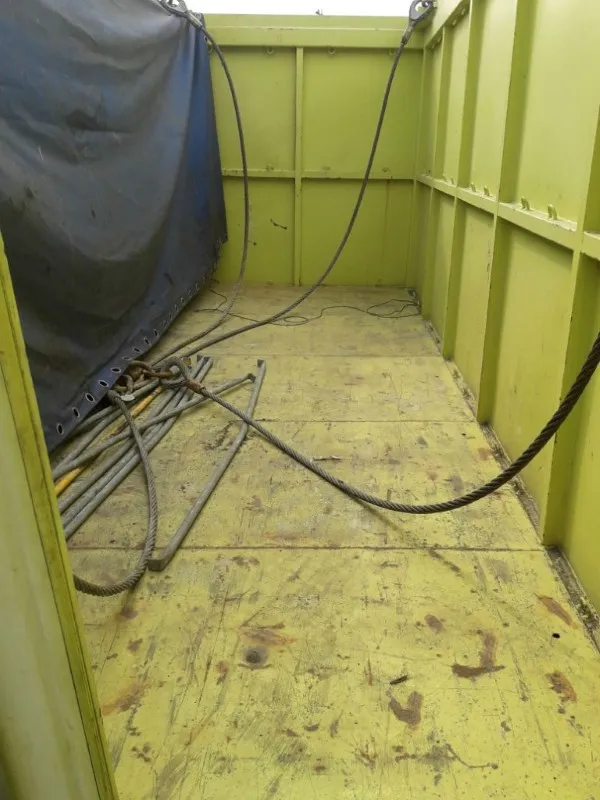
Beyond standard boxes, Container Projects supplies half-height units, open-top units, and offshore baskets. These container types facilitate the movement of drill pipes, chains, and anchors. Each unit undergoes rigorous testing for sea-state impacts and lifting stresses.
Hire or buy
Container Projects assists clients in determining the most viable commercial path. Buying is a practical choice for long-term production contracts or permanent offshore installations. Hire is a flexible, cost-effective solution for exploration phases, maintenance shutdowns, or one-off equipment transfers. We handle the certification renewals and maintenance cycles for all hire units in our UK fleet.
Condition grades and what they mean
We grade all offshore stock to ensure compliance with maritime safety law. Most offshore units are maintained to the IICL standard. IICL refers to a high standard of container repair and condition set by the Institute of International Container Lessors. While these units are engineered for extreme weather, we ensure all enclosed stock remains wind and watertight. A wind and watertight unit is a condition grade ensuring the unit is sealed against weather and light. We confirm the tare and payload for every unit. The tare is the weight of the empty container. The payload is the maximum weight of cargo the container can carry.
Delivery access, siting, and placement
Container Projects coordinates container haulage using hiab crane vehicles for precision placement. Successful delivery to your site or port requires specific conditions:
- Ground Conditions: Siting must be on a level, reinforced surface like concrete or hard-standing to support the heavy gross weight.
- Access Width: Delivery vehicles require a minimum width of 10ft. More space is needed for the deployment of crane outriggers.
- Vertical Clearance: Check for low bridges or power cables. A truck carrying a container can exceed 15ft in height.
- Turning Space: A 40ft delivery vehicle requires approximately 100ft of straight approach to manoeuvre safely.
Security, condensation, and aftercare
Offshore containers feature robust locking mechanisms and can be fitted with lock boxes to protect padlocks from tampering. To manage condensation during transit through different climate zones, Container Projects recommends moisture traps or specialised internal coatings. Our aftercare team provides maintenance advice for hinges and seals to ensure the unit remains secure and weather-proof throughout its service life.
Export use and compliance
For international transit, offshore units must comply with ISO standards and maintain current DNV certification. Container Projects ensures all units sold for export carry the necessary documentation for port authorities and shipping lines. If a unit is modified for use as a workshop or plant room, we facilitate the re-certification required for it to travel as a standard cargo unit.
How Container Projects handles supply and delivery
- Consultation: We confirm the DNV standards and payload limits required.
- Stock Check: We identify a suitable unit from our closest UK depot to your port.
- Logistics Planning: Our team reviews your site access and confirms the delivery date.
- Transport: A hiab crane vehicle delivers the unit and positions it on your prepared surface.
- Handover: The driver confirms the unit is level and provides the certification data pack.
Frequently asked questions
What is the difference between a standard and an offshore container?
Offshore containers are built with higher-grade steel and undergo more rigorous testing to survive sea-state impacts. Learn more about us and our quality standards on our profile page.
How often do offshore containers need inspection?
Under DNV 2.7-1, units require visual inspections every 6 to 12 months and periodic non-destructive testing. Detailed schedules are on our faq page.
Can you deliver to any UK port?
Yes, Container Projects provides national coverage for all major UK ports, including Aberdeen, Teesside, and Immingham. Visit our contact us page to book a delivery.
Contact Info
Container Projects LTD
298 Sandycombe Road,
Kew, Richmond,
Surrey
TW9 3NG
Tel: +44 (0) 208 948 5955
Fax: +44 (0) 208 948 3618
Our Services
Need Help?
Office Hours
Monday : 9:00-17:30
Tuesday : 9:00-17:30
Wednesday : 9:00-17:30
Thursday : 9:00-17:30
Friday : 9:00-17:30
Saturday : Closed
Sunday : Closed